
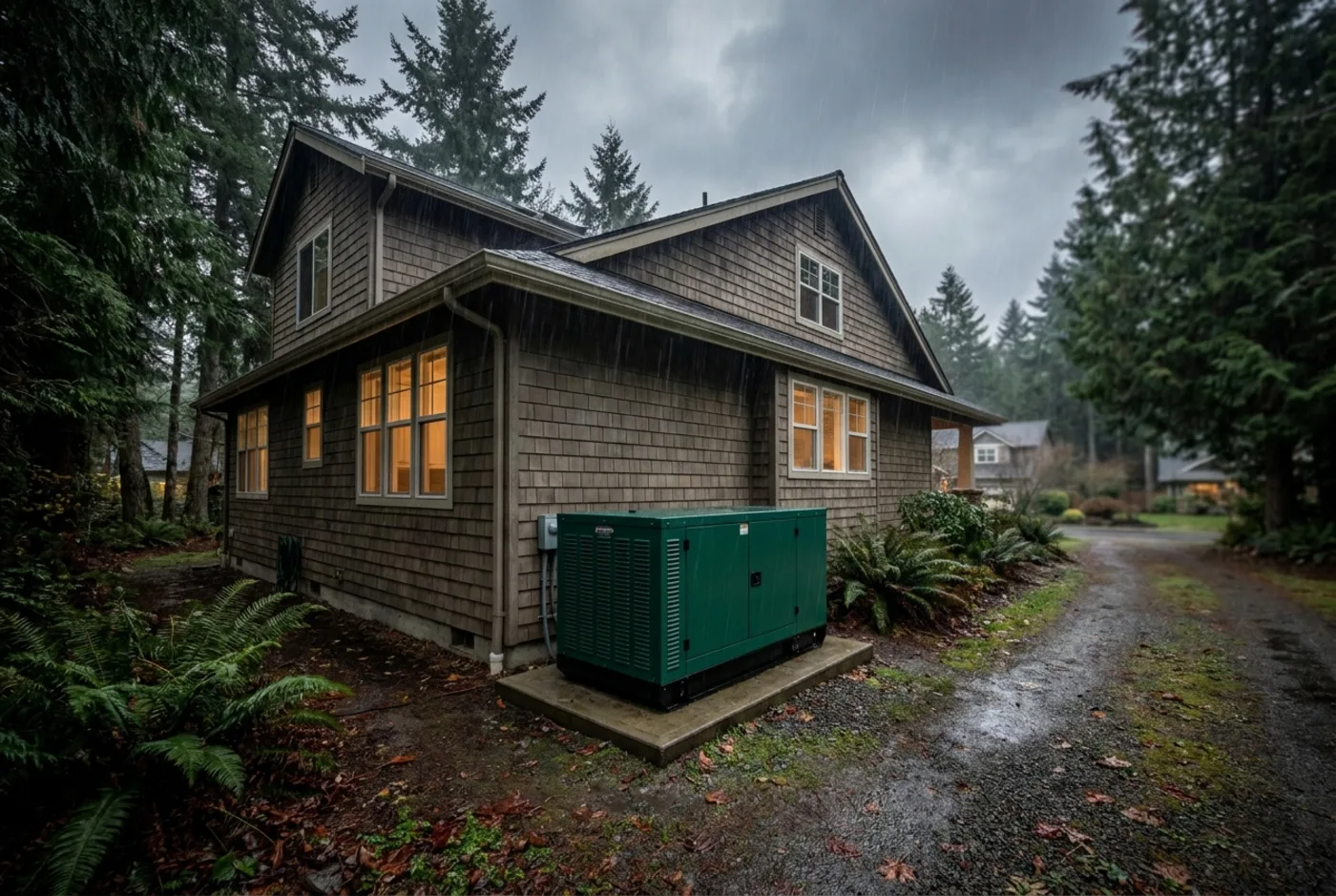
Two ways to think about sizing
The first way is to power what matters during an outage. You usually do not need to run your entire house. You need to run what keeps the home livable when the grid is down: the refrigerator and freezer, the furnace blower or heat pump, a well or sump pump if you have one, some lights, the WiFi, and a bathroom. A modestly sized generator covers this comfortably for most homes.
The second way is to power the worst plausible day, the cold evening when heat is running, dinner is cooking, and an EV is charging all at once. Covering that without a second thought takes a larger generator.
Most homeowners land in between, and a load-management approach (covered below) lets a mid-sized generator handle a peak it could not power if everything ran at the same instant.
Heat pump load is the big variable
In a modern Seattle home, the heat pump is usually the single biggest load on a generator, and it is where sizing most often goes wrong. Two things matter:
- Running power. A heat pump’s steady draw depends on its size and how hard it is working, which on the coldest days is harder.
- Startup surge. When the compressor first kicks on, it briefly pulls a spike well above its running draw. The generator has to handle that spike without bogging down, even though it lasts only a moment.
Modern inverter-style heat pumps have a gentler startup surge than older equipment, which is one reason they pair better with a generator than systems from a couple of decades ago. We account for both the running draw and the startup surge when we size your generator.
Natural gas versus propane
For a Seattle home already on natural gas, natural gas is usually the right fuel:
- Runtime is effectively unlimited as long as the utility gas keeps flowing.
- No tank is required, which saves the cost and space of installing one.
- Fuel is convenient, with no deliveries to schedule.
Propane makes more sense in a few cases: homes without natural gas service, homeowners specifically focused on earthquake resilience (gas lines can be disrupted in a major quake, while a propane tank stands alone), and the occasional situation where the gas meter is too far from the best generator location.
How an automatic transfer switch works
The automatic transfer switch is the brain of the system. When grid power drops, it senses the outage, starts the generator, waits for it to stabilize, and switches your home over to generator power. When the grid comes back and holds steady, it transfers back and shuts the generator down. You do not have to be home or do anything.
A more capable transfer switch can also shed loads, briefly holding off one large appliance when another is running, so the generator is never asked to power more than it can at once. This is what lets a mid-sized generator cover a home whose peak demand it could not handle all at the same moment.
Whole-home batteries versus generators
These solve for different goals.
Whole-home batteries (such as Tesla Powerwall, Enphase, or FranklinWH) are best for shorter outages, run silently, and pair beautifully with solar, charging from the sun during the day. The trade-off is that they need to recharge, so for a multi-day outage without sun they can run out.
Generators are best for multi-day outages, since they run as long as fuel is flowing. The trade-off is engine noise during operation and the need for fuel.
Some homeowners do both, a battery for daily use and short outages, a generator for true multi-day events. It is the most resilient setup, and also the most involved.