
What drives the price
1. System size
Heat pumps are sized by heating and cooling capacity, measured in “tons.” Seattle homes mostly need 2 to 5 tons depending on square footage, ceiling height, insulation, window count, orientation, and how well the home is sealed.
We size with a measured load calculation, not a square-foot rule of thumb. The “one ton per so many square feet” shortcuts you see online consistently oversize equipment in Seattle’s mild climate. An oversized heat pump cycles on and off too quickly, wears out sooner, and leaves some rooms uneven. Right-sizing is one of the biggest factors in how well the system works and how long it lasts.
2. Equipment line
There are a few cold-climate heat pump lines we work with, and the hardware differences are real. Higher-end units are quieter, hold their heat output better on the coldest days, and carry longer compressor warranties. The differences in sound, cold-weather performance, and warranty are worth understanding before you choose, and we walk you through them during the consult.
3. Existing ductwork condition
Modern heat pumps move more air at lower pressure than older furnaces. Sometimes your existing ductwork works fine as is. Sometimes a return needs to be enlarged, or a room that was always undersized needs a new return. We check your ducts during the consult so any duct work is in the quote up front, not a surprise later.
4. Electrical panel
This is the variable that surprises most homeowners. A heat pump needs its own dedicated circuit, and whether your panel can take that circuit depends on your panel’s size and how much of it is already in use. Some homes need no electrical work at all. Others need a panel upgrade, or a smart load-management device that can avoid one. We check your panel during the same visit. See our panel upgrade guide for the full picture.
5. Refrigerant line run
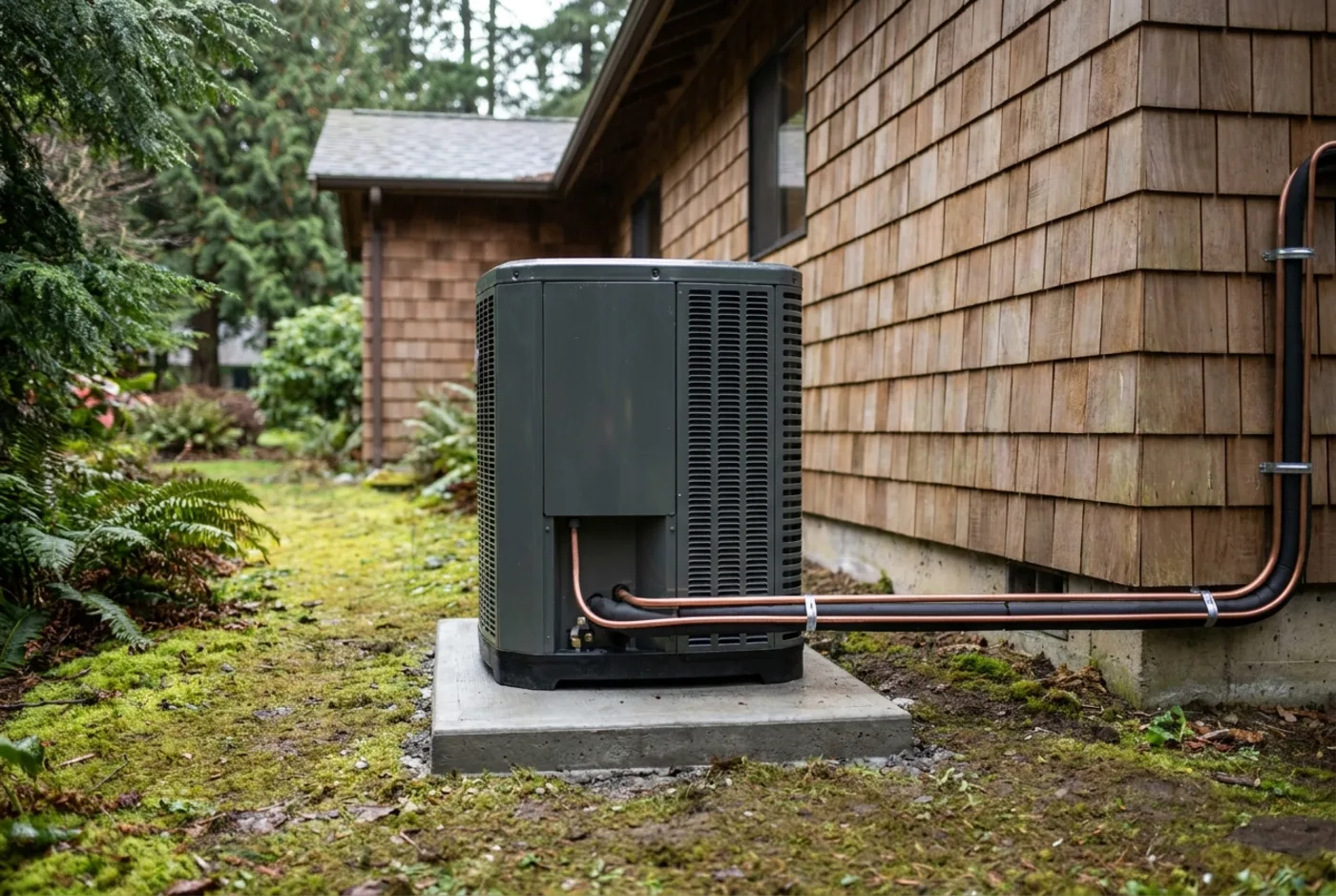
The outdoor unit connects to the indoor air handler with a copper line set. Short, direct runs are standard. Long runs (basement to attic, garage to a second floor, or routed through a chase) take more material and labor, so they add to the cost.
How the PSE rebate works
PSE (Puget Sound Energy) runs a Trade Ally rebate program for qualifying cold-climate heat pumps installed by approved contractors. We are a PSE Trade Ally, which means the rebate is applied directly to your quote as a discount. You do not fill out forms and you do not wait for a reimbursement check.
For qualifying customers, the PSE rebate runs $1,500 to $2,400. To qualify, the heat pump needs to meet PSE’s efficiency requirements, be installed by a Trade Ally, and be a PSE customer. Some Seattle homes are in Seattle City Light territory for electricity and PSE for gas; the rebate is tied to your PSE account, so it is worth confirming which utilities serve your address. We confirm your eligibility before we quote.
How the federal tax credit fits in
The federal energy-efficiency tax credit (Section 25C) gives back 30 percent of the cost of a qualifying heat pump install, up to a yearly cap, when you file your taxes. This is in addition to the PSE rebate, not instead of it.
How it works:
- You pay the quoted amount, with the PSE rebate already applied as a discount.
- We give you the documentation your tax preparer needs.
- You claim the credit when you file taxes for the year of the install, and it reduces what you owe (or increases your refund) the following spring.
The credit is nonrefundable, meaning it can only offset federal tax you actually owe that year. Most middle-income homeowners owe more than the cap, so it usually is not a constraint. If your income is low enough that this might matter, check with a tax preparer.
What does not change the price
A few things people assume affect the price but mostly do not:
- Brand loyalty. The premium for a top-tier unit is real but smaller than most people expect.
- Smart thermostat. Upgrading to a smart thermostat is a small add-on and does not drive the install cost.
- Aesthetic preferences. Cabinet color and mounting style we can accommodate without moving the price meaningfully.
- Day of the week. We do not charge a premium for scheduled installs.
What to ask in your next consult
A few questions that separate a careful contractor from one cutting corners:
- “How are you sizing the system?” If the answer is square footage alone, they are probably guessing, and probably oversizing.
- “Is the PSE rebate applied to this quote, or do I file for it later?” Trade Allies apply it directly. If you have to file it yourself, you might never see it.
- “What is not included in this number?” Permit, panel work, old equipment disposal, and any duct work should all be in the quote. If any of those are listed as “extra,” the quote is incomplete.
Ready to get your number?
We are a PSE Trade Ally, so the rebate is applied to every qualifying quote. We size every install with a load calculation tied to your actual home, not a guess. And we quote your specific home after an on-site assessment, so the number is built for your house, not a national average.
Call (206) 200-9134 or schedule online. We provide a written quote after the on-site consult.