
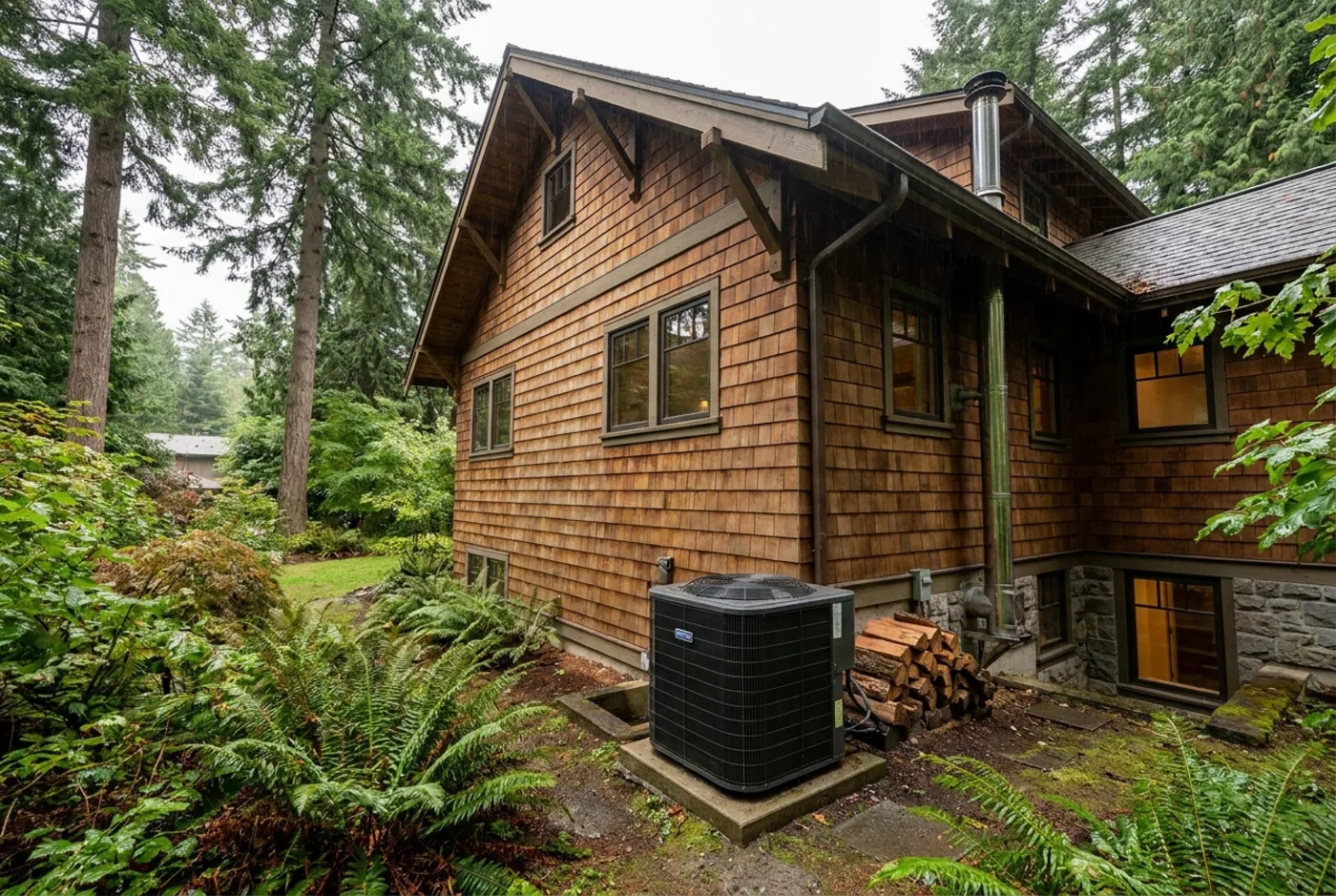
Which wins for most Seattle homes
For most Seattle homes facing furnace replacement in 2026, a heat pump is the better decision, on both comfort and cost. The PSE rebate stacks with the federal energy-efficiency credit, and a heat pump generally costs less to run than a gas furnace in Seattle’s mild climate. The higher up-front cost tends to pay back over the years that follow, and after that you are saving for the life of the equipment.
The cases where a furnace still wins: homes with a fairly new gas furnace (no real urgency to replace it), homes that would need major electrical work before a heat pump is even possible and where that is not in the budget, and homeowners who simply prefer to stay on gas. We will walk through each.
What the heat pump adds beyond heating
When you compare a gas furnace replacement to a heat pump, it is easy to look only at heating. But the heat pump brings more to the table:
- Air conditioning is included. Seattle summers are warmer than they used to be, and smoke season makes filtered indoor air valuable. Adding AC to a furnace install is a separate cost. A heat pump provides cooling as part of the same system.
- No combustion in the home. A gas furnace needs annual combustion safety checks and carbon monoxide monitoring. A heat pump has none of that.
- No reliance on a gas hookup. That future-proofs the home against gas-line rate changes or municipal gas policy shifts down the road.
Once you account for the cost of adding equivalent cooling, the comparison tilts further toward the heat pump for most Seattle homes.
When the gas furnace still wins
Three real scenarios.
A fairly new, high-efficiency furnace
If your furnace is not near the end of its life, replacing it now means throwing away years of remaining service. Keep it, maintain it, and switch to a heat pump when it actually reaches the end of its life, if the math still favors that direction then.
Major electrical work required first
Some older Seattle homes have small electrical service and active knob-and-tube wiring. To install a heat pump you would first need a panel upgrade and, often, a rewire. That electrical work is usually required eventually regardless, since most insurers will press the issue. But if you cannot take it on right now, a gas furnace replacement is the pragmatic call, then plan the rewire and electrification when budget allows.
Homeowner preference
We have had customers say they do not want to depend on electricity for heat after storm outages. That is a real preference, even when the math points to a heat pump. A gas furnace can run during an outage with a small battery backup for the blower. We will not try to talk you out of your preference.
What if I want AC but already have a working furnace?
Two paths:
Path A: Add a heat pump, replacing the furnace and adding cooling together. The PSE rebate and federal credit apply. This is the better path when your furnace is well into its life, since you would be replacing it soon anyway.
Path B: Add a ductless mini-split for cooling only, keep the furnace. The furnace keeps doing the heating, and you get cooling. This is the better path when your furnace is still fairly new.
What about operating cost?
This is the part articles often hand-wave. The honest version: in Seattle’s mild climate, a heat pump generally costs less per year to run than a gas furnace, and over the life of the system that adds up to real savings, on top of giving you cooling. How much you save depends on your home, how well it is sealed, the equipment you choose, and utility rates, which is exactly why we model your specific home rather than quote a generic figure. A tighter, better-insulated home saves more; a leakier one saves less.
Equipment lifespan
A well-maintained gas furnace and a well-maintained heat pump both last well over a decade. Heat pumps run a bit shorter on average because they work year-round (heating in winter, cooling in summer) rather than half the year. Annual maintenance, which both need, extends both significantly.
Seattle’s climate is actually gentle on heat pump equipment. The biggest stressor on a compressor is swinging between temperature extremes, and our relatively narrow range, rarely very hot in summer or very cold in winter, is easy on the equipment.
What about backup heat?
A common worry: “what if the heat pump cannot keep up in January?” For the cold-climate heat pumps we install in Seattle, this is not an issue. They are built to keep producing heat through our cold snaps without leaning on electric backup. Seattle’s coldest hour of a typical winter is well within their range. We only install cold-climate-spec units here, and they handle winter on their own.
What about gas line rate increases or bans?
Seattle and Bellevue have both signaled possible gas-related policy changes over the coming years. The likely shape of it: connection fees may rise as fewer customers share the infrastructure, some cities may limit new gas hookups in new construction, and existing customers are grandfathered in nearly every proposal floated so far. We do not recommend a heat pump based on policy uncertainty alone, the case stands on its own, but if you are on the fence, not depending on the gas grid is a real plus.
Bottom line
For most Seattle homeowners replacing a gas furnace in 2026, the heat pump is the better call: the rebate and credit, cooling included, and lower running cost add up to a better long-term outcome.
The three exceptions where a furnace still wins:
- Your existing furnace is fairly new.
- Major electrical work would be required first and the budget does not support it right now.
- You personally prefer gas, for reasons unrelated to the math.
We do not push you off gas. We run the calculation, put both numbers in front of you, and let you decide.
Get both quotes from the same contractor
Many contractors do furnace OR heat pump installs and pitch the one they are set up for. We do both. Every quote we provide includes a side-by-side of the furnace and heat pump options for your home, so you can compare directly.
Call (206) 200-9134 or schedule online. Free consult, written quote after the on-site visit, both options modeled.
Heat pump installation in Seattle · Furnace installation in Seattle