
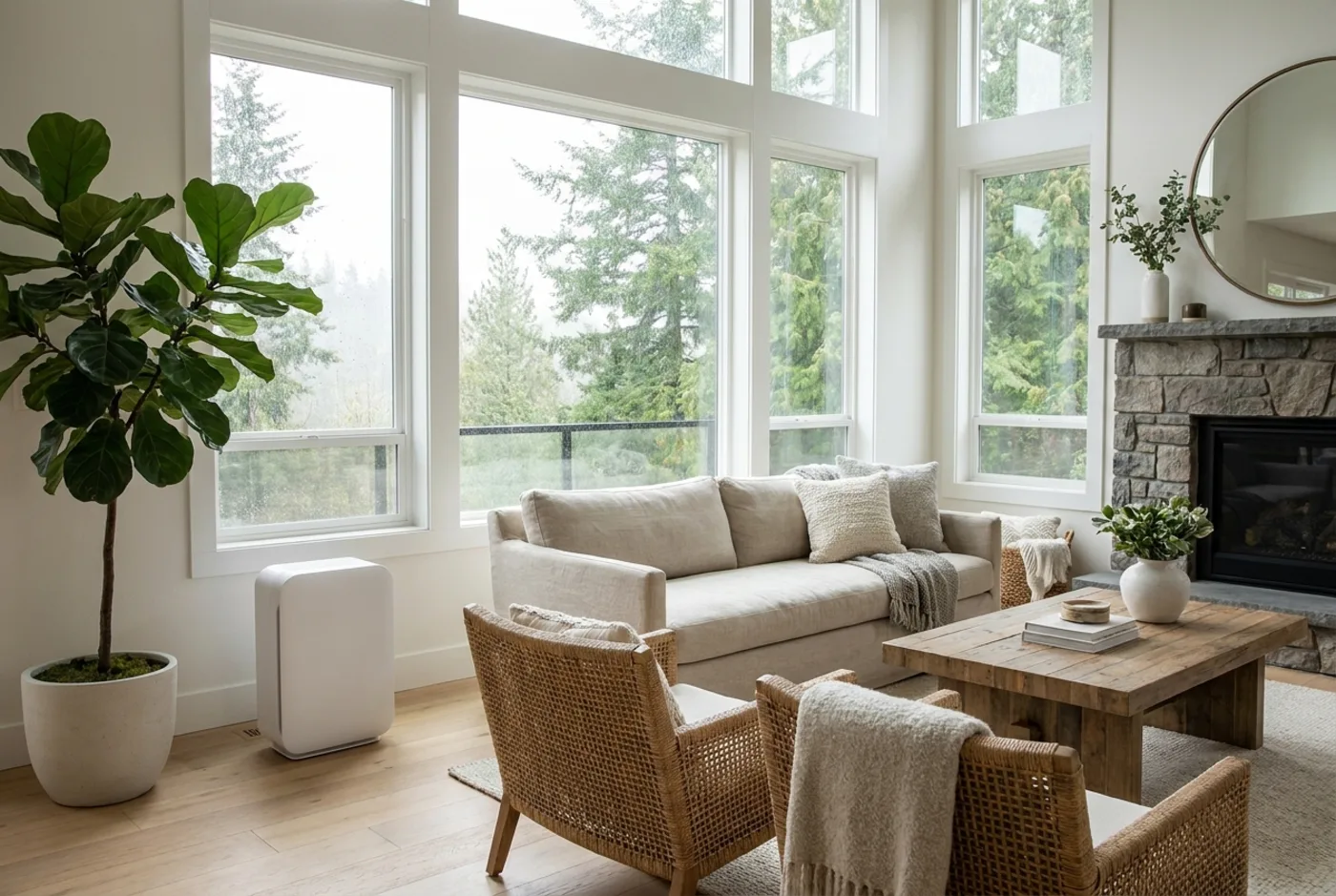
The upgrade that helps most homes the most
For most Seattle homes, the highest-value step is upgrading to a high-grade media filter in a deeper filter cabinet. A standard one-inch filter does very little for smoke. A high-grade media filter captures most smoke particles and pollen, works with your existing HVAC, and only needs changing once or twice a year. It is the first thing we recommend for most homes worried about smoke season and allergies.
Why this matters now
A few things changed over the last several years:
Wildfire smoke is annual. Late summer reliably brings days of unhealthy air. A basic filter does almost nothing against smoke particles, so closing the windows and running a basic filter is barely better than the outside air. Better filtration is what actually helps.
Tighter homes trap pollutants. Homes built or weatherized for energy efficiency are sealed up, which is good for your energy bill but means cooking smoke, off-gassing from new furniture, pet dander, and other indoor pollutants build up without active ventilation.
Pollen season is longer. Allergy season in Western Washington now stretches across much of the year, which means more months of indoor exposure unless your filtration is upgraded.
How filtration grades work
Filters are rated by how fine the particles are that they catch. A standard filter handles large dust and some pollen but lets smoke and fine particles through. A high-grade media filter catches most smoke and fine particles, which is the level you want for Seattle smoke season. The very finest filtration, true HEPA, has to be installed as a separate bypass system rather than dropped into your existing filter slot.
The catch with higher-grade filters: they restrict airflow more, and your HVAC has to be able to handle that or it works too hard and wears out faster. We measure your system’s airflow during the consult. Some homes need a deeper filter cabinet before stepping up to a high-grade filter, so the system keeps breathing properly.
Whole-home ventilation for tighter homes
For tighter, newer homes, active ventilation matters as much as filtration. A whole-home ventilation system continuously pulls stale air out and draws fresh air in, while recovering most of the heating or cooling energy from the air it exhausts, so you are not just throwing conditioned air out the window.
There are two common types. One recovers heat only, and one recovers heat plus some humidity. For Seattle’s mix of wet winters and drier summers, the humidity-recovering type is often the better fit. For older, leakier homes, whole-home ventilation is rarely the first step, since the home is already exchanging air through its leaks. Tighter modern homes are where it earns its keep.
UV light at the coil
A UV light mounted inside the system targets microbial growth on the indoor coil, where condensation keeps things damp. It helps prevent mold and bacteria buildup on the coil and keeps the coil clean for better performance over time. It is most worthwhile for homes with a history of mold or mildew, high humidity, or respiratory sensitivities. It is less useful for a home that already runs strong filtration and has a clean coil. One honest note: a coil UV light helps the coil, but it does not meaningfully disinfect the air passing through, so it should not be oversold as an air sterilizer.
When portable purifiers make sense
A portable HEPA air purifier handles a single room well. Real uses:
- Bedroom smoke protection. Run one in the main bedroom during smoke events to keep clean air for the hours you sleep.
- One highly affected person. A dedicated purifier in their bedroom or office.
- Renters. When the building HVAC is not yours to modify, a portable purifier is often the only option.
For whole-home protection, an in-line high-grade filter in your HVAC does more per dollar than several portable units scattered around the house.
Whole-home dehumidifier
This is for a specific situation: a Seattle basement with persistent humidity. Signs include a musty smell, condensation on cold pipes, peeling paint near the floor, or mold around windows. In winter, your heating system does not run long enough to dry the air out, so a whole-home dehumidifier that runs on its own schedule can help. It is not for every home, sometimes the real fix is foundation drainage or grading rather than a dehumidifier, so we assess before recommending it.