
What drives the cost
Four things mostly determine what an EV charger install runs.
Distance from the panel to the charger. The closer the charger is to your panel, the simpler the run. A charger on the garage wall next to the panel is the easy case. Longer runs through finished spaces, exterior walls, or the attic take more material and labor.
The charger itself. There are several good Level 2 chargers, and most deliver similar real-world performance for overnight charging. The choice usually comes down to which brand’s app and ecosystem you prefer. The charger cost folds into the install quote.
Your panel’s capacity. If your panel has spare capacity and an open breaker slot, the install is straightforward. If you are near capacity, you need either a panel upgrade or a load-management device, covered below.
Permits. Seattle, Bellevue, and most jurisdictions require a permit and inspection for an EV charger. We pull all permits as part of the quoted scope.
Hardwired vs plug-in, which to choose
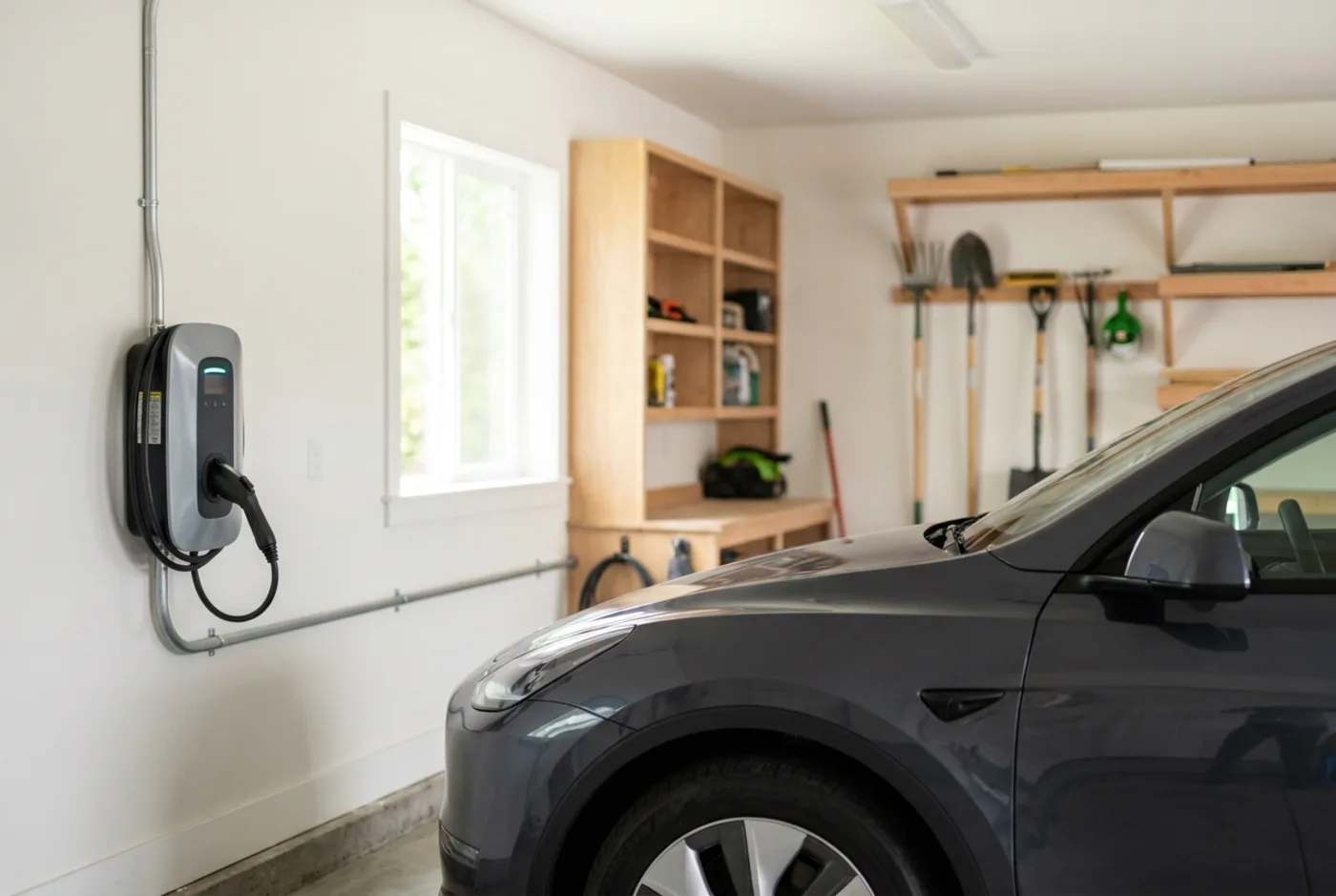
A hardwired charger is wired directly into the panel and permanently mounted on the wall. It tends to allow faster charging, gives a cleaner install, and has fewer connection points to wear out. The trade-off is less portability if you move.
A plug-in charger on a 240-volt outlet works like a high-power dryer outlet. You plug the charger in. The upside is portability, you can take it with you, and the downside is slightly slower charging and an extra connection point.
For most homeowners staying in the home for years, hardwired is the better choice. For renters or short-term owners, the plug-in route makes more sense.
When a load-management device saves you a panel upgrade
If your panel is near capacity, you have two options:
Upgrade the panel. More work, more cost, but the right move if you are heading toward fuller electrification.
Add a load-management device. This is a smaller piece of equipment that watches your panel’s total draw and throttles the EV charger when other big appliances are running, so you never exceed your service. It is a much smaller spend than a panel upgrade.
A load-management device is usually the right answer when:
- Your panel is smaller and you have one EV.
- You do not expect to add an induction range, an electric water heater, or major workshop loads.
- You are not planning a second EV charger.
A panel upgrade is usually the right answer when:
- You are planning fuller electrification in the next few years.
- You have or are adding several EVs.
- You have workshop or pool/spa loads.
- Your panel is one of the older brands insurers want replaced anyway.
We run a load calculation during the consult and price whichever path fits, so you can compare.