
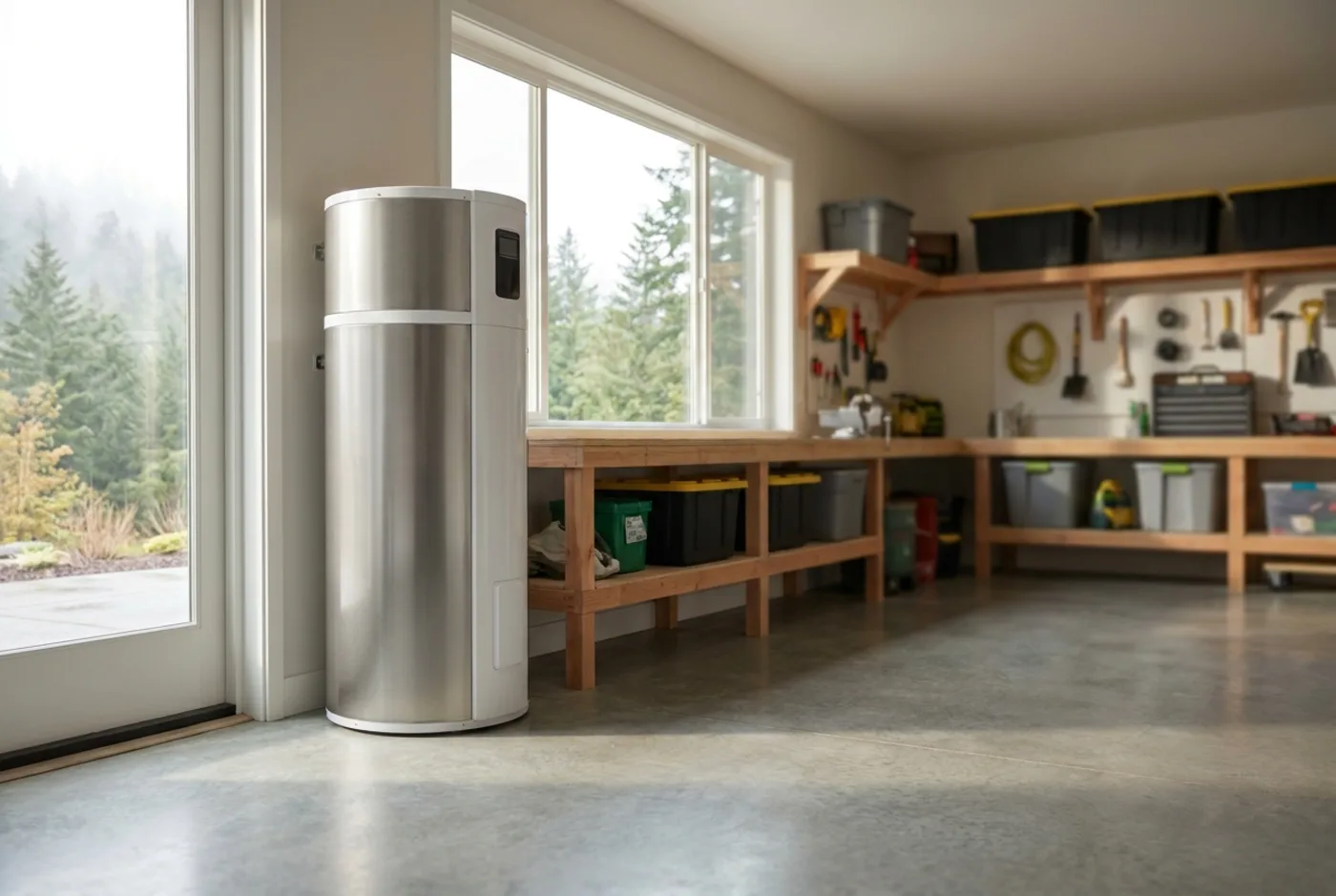
What is a heat pump water heater?
It is essentially a small heat pump that heats water instead of air. The unit pulls heat from the surrounding room air, your basement, garage, or utility room, and transfers it into the water in the tank. Because it moves existing heat rather than generating heat from scratch the way a standard electric water heater does, it uses far less energy to heat the same water.
The trade-offs
The room around it cools a little. Pulling heat from the air cools that space slightly during a heating cycle. For most Seattle basements and garages, that is fine. For a tight, enclosed closet, it is a problem.
It runs quieter than a refrigerator, but louder than a gas tank. It is fine in a basement, garage, or utility room. On a wall shared with a bedroom, you would hear it.
Recovery is a bit slower than gas. For most households this does not matter, since water heats overnight. For a home with simultaneous morning showers plus dishwasher plus laundry, it can, and there is a “hybrid” mode that handles those peaks.
The cost picture, in plain terms
After the PSE rebate and the federal energy-efficiency credit, a heat pump water heater often lands close to the out-of-pocket cost of a standard tank, while costing much less to run over its life. The savings come from the efficiency: it does more with less electricity than a standard electric tank, and it avoids the gas you would otherwise burn. Over the years, that running-cost gap is where the value is, and it widens the longer you own the home.
We model the actual numbers for your home and your placement during the consult, including which rebate and credit your equipment qualifies for, so you see a real comparison rather than a generic figure.
When a heat pump water heater makes sense
You have basement or garage placement. These units need a reasonable amount of room volume to work well. Most Seattle basements and garages qualify.
You are staying in the home for years. The operating savings compound over time. With a shorter horizon, the math is closer to break-even with gas.
You are already going electric. If you have or are planning a heat pump for heating and cooling, a heat pump water heater continues the path, on a single electric utility relationship.
You qualify for income-based rebate adders. Income-qualified PSE households can stack additional rebate money on top of the standard amount.
When it does not make sense
A small, unventilated closet. These units need airflow. A tight interior closet does not work without adding ducting.
A short ownership horizon. The operating savings do not fully amortize if you are moving soon.
A very high-demand household with no tolerance for recovery time. A larger unit or hybrid mode handles this, but it is worth flagging.
Placement on a bedroom wall. Noise can be an issue if the unit shares a wall with a bedroom.
The federal income-qualified rebate program
The federal Inflation Reduction Act created a home electrification rebate program that each state administers. Washington’s version is still being rolled out and is not yet producing rebates for most homeowners. We update quotes as the program comes online, so you capture anything you qualify for.