
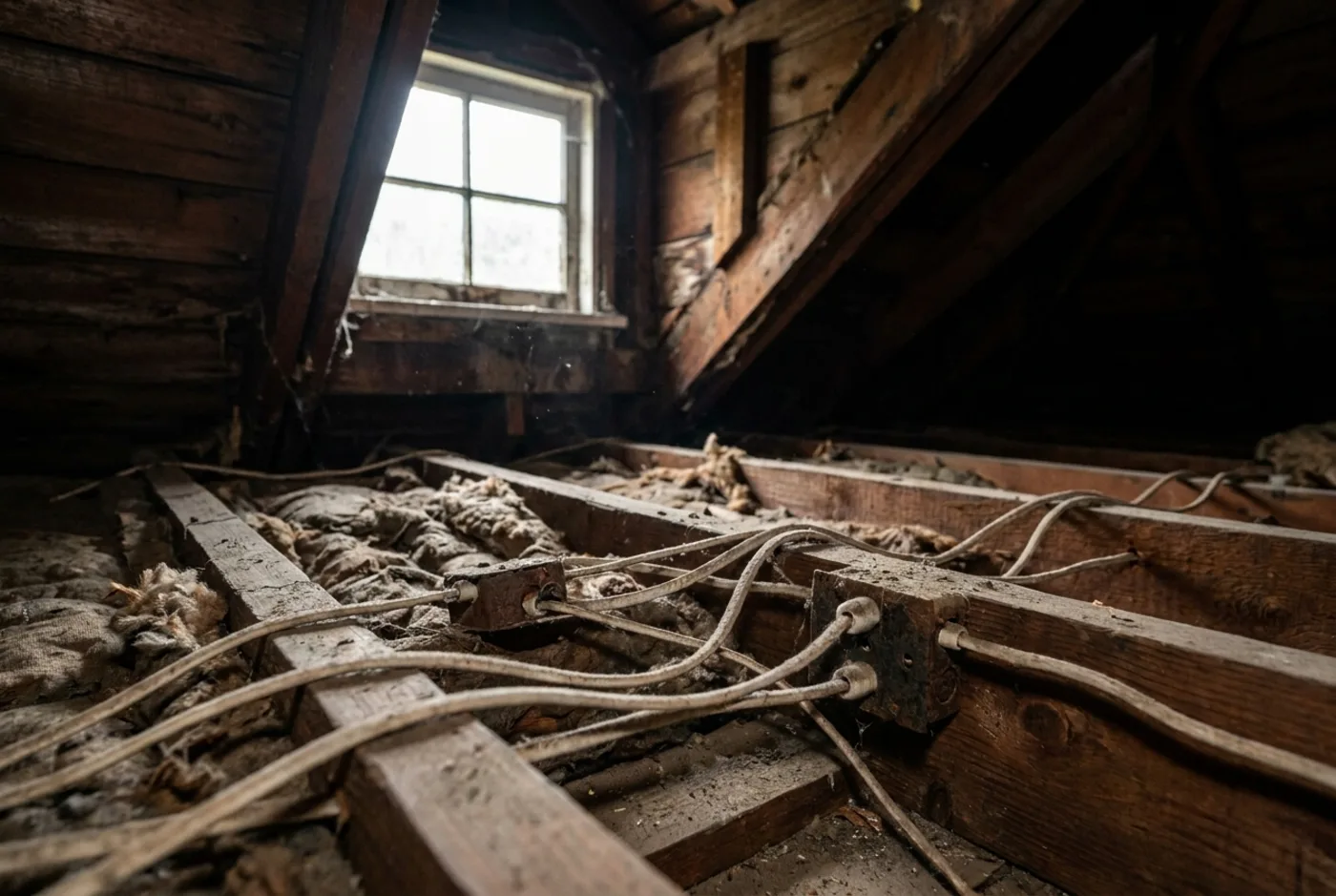
What drives the scope, and the cost
The biggest factor in a knob-and-tube project is access. A home where the wiring runs through an accessible attic and crawl space is far less involved than the same home with a finished basement, blown-in insulation, and tight wall cavities. The amount of active wiring, the size of the home, and whether a panel upgrade is bundled in also matter. Because those vary so much from house to house, we scope your specific home and quote it directly rather than work from a generic range.
The most important cost-saver is the distinction between active and dormant wiring, covered below. Identifying what truly needs to be replaced, rather than assuming the whole house, is often what keeps a project from ballooning.
Why insurance is pushing the issue
Over the last few years, more carriers have grown reluctant to write or renew policies on homes with active knob-and-tube wiring, and some homeowners have received non-renewal notices citing it. Requirements differ a lot from carrier to carrier, and even from policy to policy, so the single most useful thing you can do is call your own carrier and ask exactly what they require before you start any work. The general trend is that most older homes now have a window of a year or two to address active knob-and-tube before a renewal forces the question.
Active vs dormant knob-and-tube
This distinction is the one most contractors do not explain, and it matters:
Active knob-and-tube is energized, with current flowing through it right now. This is what carriers object to.
Dormant knob-and-tube is still in the walls but disconnected from the panel, so no current flows. It is not a live fire risk, and most carriers do not object to dormant wiring being left in the walls. They object to the active wiring.
In an older home you typically find a mix of both, some of the old wiring already disconnected from prior partial rewires, and some still live. This is why partial remediation works. If we can identify and replace only the active wiring while safely leaving dormant wiring in place, the project shrinks considerably. It is worth having someone diagnose what is actually live before assuming the whole house needs replacing. We diagnose first.
What a real assessment looks like
Step by step:
- Panel inspection. We open the panel and identify which circuits are knob-and-tube. The older cloth-insulated wiring is distinct from modern wiring at the breaker.
- Room-by-room tracing. For each knob-and-tube circuit, we trace which rooms and outlets it serves. Some power only an outlet or two; others power whole rooms.
- Attic and crawl space inspection. We look for active runs through accessible spaces. Knob-and-tube’s ceramic supports are easy to spot.
- Outlet and box inspection. We open a representative set of outlets to see what is modern and what is still connected to old wiring behind the wall.
- Written scope. We produce a written description of what is active versus dormant, what your insurer requires, and the partial versus full options.
This assessment is $129 plus tax, credited toward the rewire work.
What insurance carriers tend to want to see
When you report completed work to your carrier, they typically want:
- Photos showing the old wiring before the work
- Photos showing the modern wiring and updated devices after
- The city permit number
- The inspection sign-off with the city’s stamp
- A detailed description of the scope, full home versus partial
- The appropriate licensed-electrician documentation Washington requires for service work
We assemble all of this into a single packet at completion. Requirements vary by carrier, so confirm with yours what they need before the work starts.
How long it takes
A partial remediation of a few rooms is a matter of days. A whole-home rewire of a smaller home runs a couple of weeks, and a larger home longer, plus additional time for drywall patching after the access cuts. We work in occupied homes; power is intermittent in the rooms being worked. Most homeowners stay in the home, though some prefer a hotel for the final connection days.
Schedule a knob-and-tube assessment
Call (206) 200-9134. The diagnostic assessment is $129 plus tax, credited toward the work, and includes a written scope and an insurance documentation outline.